Cybersecurity Threats: Protecting US Businesses This Quarter
Advertisements
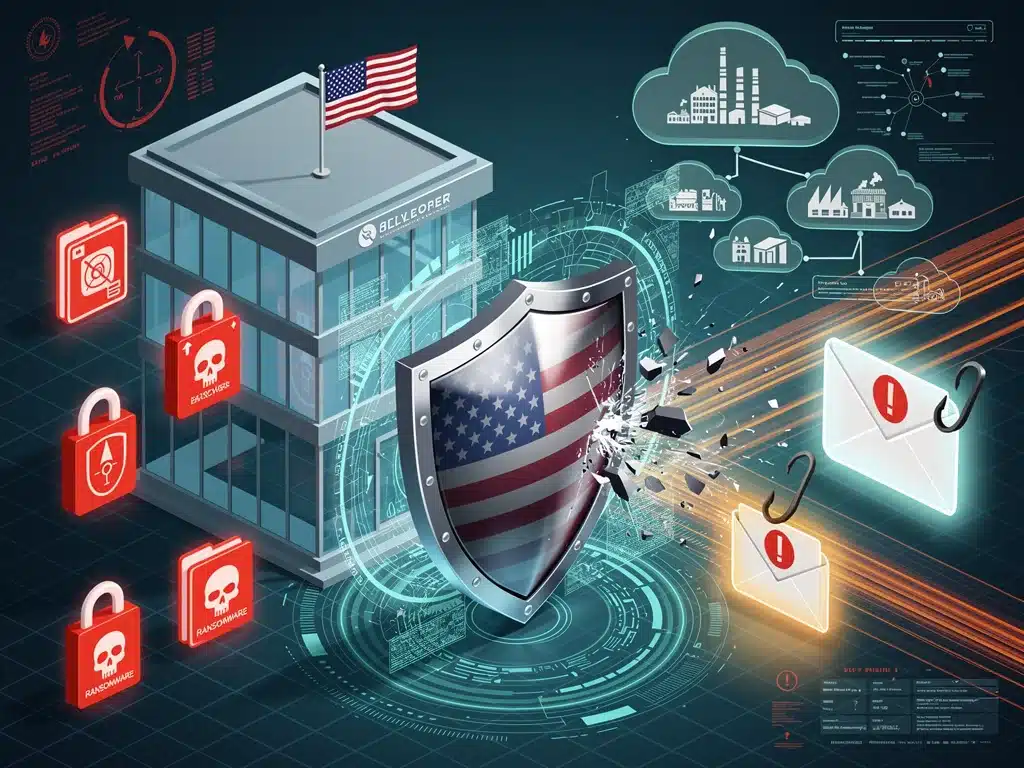
The 3 Critical Cybersecurity Threats Facing US Businesses This Quarter and How to Mitigate Them involve a complex interplay of ransomware, sophisticated phishing campaigns, and vulnerabilities within supply chains, demanding immediate and comprehensive defensive strategies.
In an increasingly interconnected digital landscape, understanding and addressing the 3 critical cybersecurity threats facing US businesses this quarter and how to mitigate them is not merely a technical concern but a fundamental aspect of business continuity and resilience. As organisations in the United States continue to digitalise operations and expand their online presence, the attack surface for malicious actors grows exponentially, making robust cybersecurity measures more vital than ever before.
The Escalating Threat of Ransomware Attacks
Ransomware remains a pervasive and highly damaging threat for US businesses, evolving in sophistication and targeting methods. This quarter, attackers are not only encrypting data but also exfiltrating it, adding a “double extortion” layer that significantly increases pressure on victims to pay. The consequences, ranging from operational disruption to severe financial penalties and reputational damage, underscore the urgent need for comprehensive defensive strategies.
Understanding Modern Ransomware Tactics
Modern ransomware groups are highly organised, often operating as Ransomware-as-a-Service (RaaS) models, making these attacks accessible to a broader range of malicious actors. They conduct extensive reconnaissance, identifying critical systems and data before launching their attacks, often exploiting unpatched vulnerabilities or weak access controls.
- Initial Access Brokers (IABs) sell network access to ransomware groups.
- Attackers use advanced persistent threat (APT) techniques to remain undetected.
- Double extortion involves data encryption and exfiltration for public release.
- Targeted attacks focus on high-value organisations capable of paying large ransoms.
Mitigating Ransomware Risks Effectively
Effective ransomware mitigation requires a multi-layered approach that addresses prevention, detection, and response. It is crucial to move beyond basic antivirus solutions and implement a holistic security posture that anticipates and counters sophisticated attacks. Businesses must regularly review and update their incident response plans to ensure swift action in the event of a breach.
Implementing strong access controls, such as multi-factor authentication (MFA) for all critical systems, significantly reduces the likelihood of unauthorised access. Regular employee training on phishing awareness is also paramount, as many ransomware attacks originate from deceptive emails. Furthermore, maintaining immutable backups, isolated from the network, provides a last line of defence against data loss.
- Implement robust endpoint detection and response (EDR) solutions.
- Regularly back up critical data to offsite, immutable storage.
- Enforce strong password policies and multi-factor authentication (MFA).
- Conduct frequent security awareness training for all employees.
In conclusion, ransomware’s continued evolution demands a proactive and adaptive defence. US businesses must invest in advanced security technologies, foster a culture of cybersecurity awareness, and maintain well-tested incident response procedures to effectively counter this persistent threat.
The Pervasive Danger of Advanced Phishing Campaigns
Phishing remains a primary vector for cyberattacks, but its nature has become increasingly sophisticated. This quarter, US businesses are grappling with highly personalised and convincing phishing campaigns, including spear phishing, whaling, and business email compromise (BEC) schemes. These attacks exploit human psychology, often bypassing technical controls and leading to significant financial losses or data breaches.
Evolution of Phishing Techniques
Gone are the days of easily identifiable, grammatically incorrect phishing emails. Modern phishing campaigns are meticulously crafted, often impersonating trusted entities or individuals within an organisation. Attackers leverage open-source intelligence (OSINT) to gather information, making their lures highly credible and difficult for employees to discern from legitimate communications.
Spear phishing targets specific individuals with tailored messages, while whaling attacks focus on senior executives, aiming for high-value targets. BEC scams, in particular, often involve tricking employees into transferring funds or divulging sensitive information by impersonating a CEO or a vendor. These advanced techniques highlight the need for enhanced vigilance and comprehensive security training.
- Social engineering tactics are increasingly sophisticated and personalised.
- Attackers exploit urgency, authority, and emotional manipulation.
- Deepfake technology is emerging as a potential tool for voice and video phishing.
- Credential harvesting sites mimic legitimate login pages with high fidelity.
Strengthening Defences Against Phishing
Mitigating advanced phishing campaigns requires a multi-faceted approach combining technological solutions with continuous human education. No single tool can entirely eliminate the risk, making a layered defence essential. Employee awareness is the first and often most critical line of defence against these social engineering tactics.
Implementing robust email security gateways that include advanced threat protection (ATP) can filter out many malicious emails before they reach employee inboxes. Regularly simulating phishing attacks can help employees identify and report suspicious communications, reinforcing training. Additionally, establishing clear protocols for verifying financial requests and sensitive data transfers can prevent BEC fraud.
- Deploy advanced email filtering and anti-phishing solutions.
- Conduct regular, realistic phishing simulation exercises.
- Educate employees on the latest phishing tactics and red flags.
- Implement DMARC, SPF, and DKIM for email authentication.
In conclusion, advanced phishing campaigns pose a significant and evolving threat to US businesses. By combining cutting-edge email security technologies with continuous employee training and robust internal verification processes, organisations can significantly reduce their susceptibility to these deceptive attacks.
Supply Chain Vulnerabilities and Third-Party Risks
The interconnected nature of modern business means that an organisation’s security is only as strong as its weakest link within its supply chain. This quarter, supply chain attacks and third-party risks have emerged as a critical concern for US businesses. Attackers are increasingly targeting less secure vendors or partners to gain access to larger, more lucrative targets, creating a ripple effect of potential breaches.
Understanding Supply Chain Attack Vectors
Supply chain attacks can manifest in various forms, from compromising software updates to exploiting vulnerabilities in hardware components. A single compromised vendor can expose numerous downstream customers, making these attacks particularly potent and widespread. The SolarWinds incident serves as a stark reminder of the devastating impact such a breach can have on a vast array of organisations, including government agencies and major corporations.
These attacks often exploit trust relationships, making them difficult to detect using traditional security controls. They can involve injecting malicious code into legitimate software, tampering with hardware during manufacturing, or compromising a service provider’s network to access customer data. The complexity and opacity of many supply chains further complicate risk assessment and mitigation efforts.
- Software supply chain attacks inject malware into legitimate software.
- Hardware supply chain attacks compromise devices during manufacturing.
- Service provider breaches provide access to multiple client networks.
- Open-source software dependencies can introduce hidden vulnerabilities.
Strategies for Managing Third-Party Risk
Effectively managing supply chain and third-party risks requires a comprehensive vendor risk management (VRM) programme. This involves not only assessing the security posture of direct suppliers but also understanding the security practices of their sub-contractors and partners. Transparency and due diligence are paramount in establishing a resilient supply chain.
Organisations should implement robust contractual agreements with vendors that mandate specific security controls, regular audits, and incident reporting requirements. Continuous monitoring of third-party security posture, utilising tools that provide real-time risk intelligence, is also essential. Furthermore, segmenting networks and implementing least privilege access can limit the blast radius if a supply chain partner is compromised.
- Conduct thorough security assessments and due diligence on all vendors.
- Implement strong contractual security clauses with third-party providers.
- Monitor third-party security posture continuously.
- Segment networks to limit lateral movement in case of a breach.
In summary, the intricate web of supply chains presents significant cybersecurity challenges. US businesses must proactively identify and manage third-party risks through stringent vendor assessments, clear contractual obligations, and continuous monitoring to protect their own operations and data.
Strengthening Incident Response and Recovery Capabilities
Even with the most robust preventative measures, a cybersecurity incident is an unfortunate reality for many US businesses. Therefore, having a well-defined and frequently tested incident response and recovery plan is not just recommended, but essential. This quarter, organisations must focus on enhancing their capabilities to detect, contain, eradicate, and recover from cyberattacks swiftly and efficiently, minimising damage and downtime.
Developing a Comprehensive Incident Response Plan
An effective incident response plan (IRP) outlines the roles, responsibilities, and procedures for handling a cyberattack from start to finish. It should cover everything from initial detection and communication protocols to forensic analysis and post-incident review. A well-rehearsed IRP can significantly reduce the impact of an attack and accelerate the return to normal operations.
Key components include clear escalation paths, designated incident response teams, and pre-approved communication templates for stakeholders, including customers, regulators, and law enforcement. The plan should also address data breach notification requirements, which vary by state and industry, to ensure legal compliance and maintain trust.
- Define clear roles and responsibilities within the incident response team.
- Establish communication protocols for internal and external stakeholders.
- Outline detailed steps for detection, containment, eradication, and recovery.
- Include procedures for forensic analysis and evidence preservation.
Enhancing Recovery and Business Continuity
Beyond containing the immediate threat, a critical aspect of incident response is the ability to recover operations and data effectively. This involves robust backup and recovery strategies, including immutable backups and geographically dispersed storage. Business continuity planning (BCP) and disaster recovery (DR) strategies are integral to ensuring that critical business functions can resume with minimal disruption.
Regular testing of recovery procedures, including full system restores from backups, is crucial to identify any weaknesses or gaps. Furthermore, investing in cyber insurance can provide a financial safety net, helping to cover costs associated with incident response, legal fees, and reputational damage. However, cyber insurance should complement, not replace, strong security practices.
- Implement and regularly test comprehensive data backup and recovery solutions.
- Develop and exercise business continuity and disaster recovery plans.
- Consider cyber insurance as part of a broader risk management strategy.
- Conduct post-incident reviews to identify lessons learned and improve security posture.
Ultimately, a strong incident response and recovery capability is a cornerstone of organisational resilience. By preparing for the inevitable, US businesses can navigate cyberattacks with greater confidence, reducing their overall risk exposure and protecting their long-term viability.
The Importance of Continuous Security Monitoring and Threat Intelligence
In the dynamic realm of cybersecurity, threats are constantly evolving, making continuous security monitoring and up-to-date threat intelligence indispensable for US businesses this quarter. Relying solely on perimeter defences and periodic assessments is no longer sufficient. Proactive vigilance and the ability to detect anomalies in real-time are critical for identifying and responding to emerging threats before they can cause significant harm.
Implementing Robust Security Operations Centres (SOCs)
Many US businesses, particularly larger enterprises, benefit from establishing or outsourcing a Security Operations Centre (SOC). A SOC provides 24/7 monitoring of an organisation’s information systems, including networks, servers, endpoints, and applications, for potential security incidents. Skilled analysts leverage advanced tools to detect, analyse, and respond to cyber threats.
For smaller businesses that may not have the resources for an in-house SOC, managed security service providers (MSSPs) offer a viable alternative. These providers deliver expert monitoring and response services, allowing businesses to access enterprise-grade security without the overhead. The key is to ensure that monitoring covers all critical assets and provides actionable insights.
- Deploy Security Information and Event Management (SIEM) systems.
- Utilise Endpoint Detection and Response (EDR) for real-time endpoint visibility.
- Implement Network Detection and Response (NDR) for network traffic analysis.
- Consider a Managed Detection and Response (MDR) service for outsourced expertise.
Leveraging Threat Intelligence for Proactive Defence
Threat intelligence provides valuable context about current and emerging cyber threats, including attacker tactics, techniques, and procedures (TTPs), as well as indicators of compromise (IoCs). By integrating threat intelligence feeds into their security operations, US businesses can shift from a reactive to a proactive defence posture, anticipating attacks and strengthening their defences accordingly.
This involves subscribing to reputable threat intelligence sources, participating in industry information-sharing groups, and leveraging platforms that automate the ingestion and analysis of threat data. The ability to understand the adversary’s motives and methods is crucial for developing targeted and effective security controls. Regular analysis of threat intelligence helps in prioritising vulnerabilities and allocating resources efficiently.
- Subscribe to reputable threat intelligence platforms and feeds.
- Participate in industry-specific information-sharing communities.
- Integrate threat intelligence into SIEM and other security tools.
- Conduct regular threat hunting exercises based on intelligence.
In conclusion, continuous security monitoring and the strategic use of threat intelligence are vital for US businesses to stay ahead of cyber adversaries. By maintaining constant vigilance and leveraging external insights, organisations can significantly enhance their ability to detect, prevent, and respond to evolving cybersecurity threats.
Fostering a Culture of Cybersecurity Awareness
Ultimately, technology alone cannot provide complete protection against sophisticated cyber threats. The human element often remains the weakest link in an organisation’s security chain. This quarter, US businesses must prioritise fostering a strong culture of cybersecurity awareness among all employees, transforming them from potential vulnerabilities into an active line of defence. An informed workforce is a resilient workforce.
Designing Effective Security Awareness Training
Effective security awareness training goes beyond annual compliance checkboxes. It should be engaging, relevant, and continuous, addressing the latest threats and best practices. Training programmes should be tailored to different roles within the organisation, recognising that executives, IT staff, and general employees face varying levels of risk and have different security responsibilities.
Interactive modules, real-world examples, and gamification can make training more impactful and memorable. Crucially, the training should empower employees to recognise suspicious activities, understand the consequences of their actions, and know how to report potential incidents without fear of reprimand. Reinforcement through regular communication and reminders is also vital for long-term retention.
- Conduct mandatory and regular cybersecurity awareness training.
- Tailor training content to different employee roles and responsibilities.
- Use interactive methods like quizzes, simulations, and real-life scenarios.
- Emphasise the importance of reporting suspicious activities immediately.
Leadership Buy-in and Reinforcement
For a cybersecurity culture to truly thrive, it must be championed from the top down. Leadership buy-in is essential, demonstrating that cybersecurity is a strategic priority for the entire organisation. When executives actively participate in training and adhere to security protocols, it sets a powerful example for the rest of the workforce, reinforcing the importance of these practices.
Furthermore, establishing clear and accessible channels for employees to ask questions, report concerns, and receive support fosters an environment of openness and collaboration. Recognising and rewarding employees who demonstrate strong security behaviours can also incentivise good practices. A positive and supportive approach encourages vigilance rather than fear.
- Secure active commitment and participation from senior leadership.
- Integrate cybersecurity into performance reviews and job descriptions.
- Establish clear reporting mechanisms for security incidents and concerns.
- Promote a blame-free culture regarding honest security reporting.
In conclusion, building a robust cybersecurity culture is a continuous journey that requires consistent effort and investment. By educating and empowering employees, US businesses can significantly strengthen their overall security posture, turning their workforce into their most valuable asset in the fight against cyber threats.
| Key Threat | Mitigation Strategy |
|---|---|
| Ransomware Attacks | Implement immutable backups, MFA, and EDR solutions. |
| Advanced Phishing | Deploy advanced email filtering and continuous employee training. |
| Supply Chain Vulnerabilities | Conduct thorough vendor assessments and continuous third-party monitoring. |
| Weak Incident Response | Develop and regularly test comprehensive incident response and recovery plans. |
Frequently Asked Questions About Cybersecurity Threats
Ransomware is malicious software that encrypts data until a ransom is paid. It’s a top threat because it disrupts operations, causes significant financial loss through ransom payments or recovery costs, and can lead to data exfiltration, adding a layer of double extortion for businesses.
Protection involves a combination of advanced email filtering, multi-factor authentication (MFA), and continuous employee security awareness training. Regular phishing simulations help employees recognise and report suspicious emails, reducing the likelihood of successful social engineering.
Supply chain risks involve vulnerabilities in third-party vendors or partners that attackers exploit to access a target organisation. They impact businesses by creating indirect entry points for breaches, potentially compromising sensitive data or disrupting critical operations across multiple entities.
An incident response plan is crucial because it provides a structured approach to detecting, containing, and recovering from cyberattacks. A well-defined plan minimises damage, reduces downtime, ensures legal compliance, and helps maintain customer trust during a security incident.
A strong cybersecurity culture transforms employees into an active defence layer. It fosters vigilance, encourages reporting of suspicious activities, and reinforces secure practices, ultimately reducing human error—often the weakest link—and enhancing overall organisational resilience against cyber threats.
Conclusion
Navigating the complex landscape of modern cybersecurity requires continuous vigilance and strategic investment. For US businesses this quarter, the persistent threats of ransomware, sophisticated phishing campaigns, and supply chain vulnerabilities demand a proactive and multi-layered defence. By combining robust technological solutions, comprehensive incident response planning, continuous threat intelligence, and a deeply embedded culture of cybersecurity awareness, organisations can significantly enhance their resilience. Protecting digital assets and maintaining operational integrity is not just an IT task, but a collective responsibility that underpins business success in today’s digital economy.