2026 Supreme Court Docket: Key Cases Reshaping US Law
Advertisements
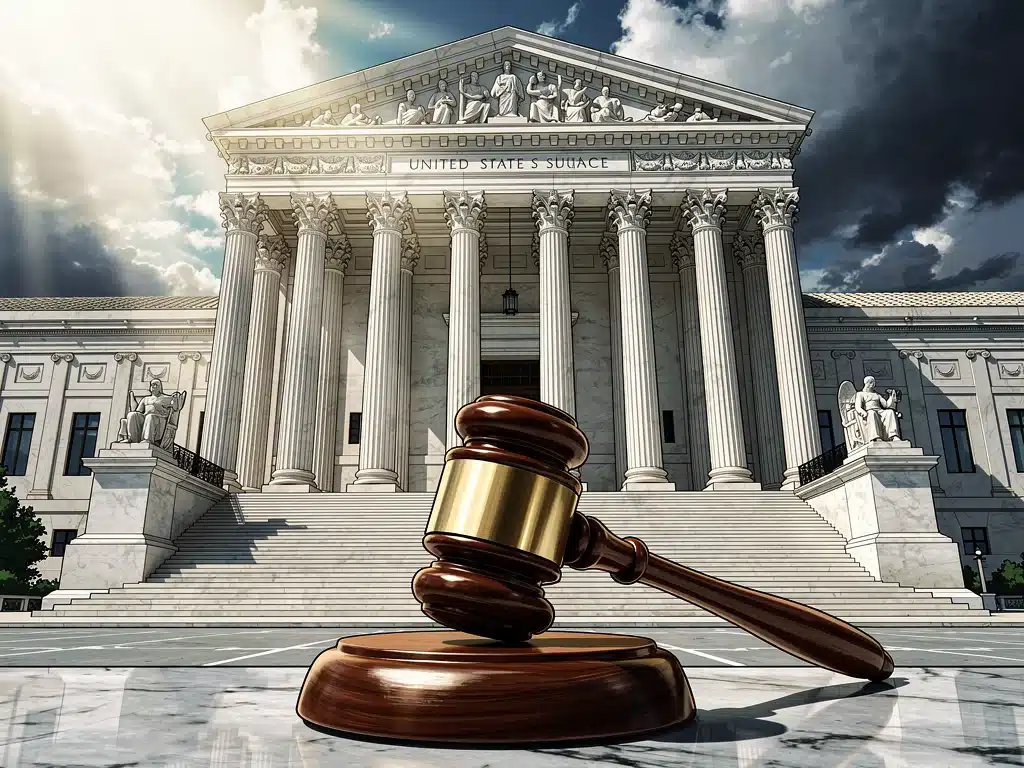
The 2026 Supreme Court Docket presents a series of landmark cases poised to significantly redefine federal law and individual rights, impacting various facets of American life and setting precedents for future legal interpretations.
The United States Supreme Court stands as the ultimate arbiter of law, its decisions echoing through generations and shaping the very fabric of American society. As we look towards the 2026 term, the 2026 Supreme Court Docket is already drawing significant attention, featuring cases that could fundamentally alter federal law and individual rights across the nation. Understanding these impending legal battles is not merely an academic exercise; it is crucial for every citizen, offering insight into the future direction of policy, personal freedoms, and governmental authority.
Understanding the Supreme Court’s Role and Process
Before delving into the specifics of the 2026 docket, it is essential to grasp the foundational role of the Supreme Court and how cases reach its hallowed chambers. The Court serves as the highest judicial body in the federal government, primarily functioning as an appellate court. This means it reviews decisions made by lower federal and state courts, especially when there are conflicts in legal interpretation or questions of constitutional law. Its rulings are binding across the entire country, establishing precedents that all other courts must follow.
The process for a case to reach the Supreme Court is rigorous and highly selective. Thousands of petitions for a writ of certiorari are filed each year, but the Court typically grants review to fewer than 100 cases. These are usually cases that involve a significant legal question, a split among lower courts on a particular issue, or a matter of substantial public importance. Once a case is granted certiorari, both sides submit written briefs, followed by oral arguments where attorneys present their points directly to the nine justices. The justices then deliberate privately, eventually issuing a majority opinion that explains their reasoning, along with any concurring or dissenting opinions.
The Significance of Judicial Precedent
- Stare Decisis: This Latin term, meaning ‘to stand by things decided,’ is a core principle guiding judicial decisions. It dictates that courts should generally adhere to previous rulings, ensuring consistency and predictability in the law.
- Evolving Interpretations: While stare decisis is vital, the Supreme Court can, and sometimes does, overturn its own precedents. This usually occurs when societal norms have significantly shifted, or when the Court believes a previous interpretation was fundamentally flawed.
- Impact on Future Cases: Every decision made by the Supreme Court creates a precedent that lower courts must follow, profoundly influencing how similar legal questions are resolved in the future.
The Court’s composition, with its nine justices, plays a critical role in its decisions. The ideological balance of the Court can dramatically influence outcomes, particularly in cases involving contentious social or political issues. Understanding this dynamic is key to anticipating the potential impact of the cases on the 2026 Supreme Court docket.
First Amendment Freedoms: Speech, Religion, and Assembly
The First Amendment of the U.S. Constitution guarantees some of our most fundamental liberties, protecting freedom of speech, religion, and the press, among others. Each Supreme Court term typically features cases that test the boundaries and interpretations of these vital protections, and the 2026 docket is expected to be no exception. These cases often involve a delicate balancing act between individual rights and societal interests, or between differing interpretations of what constitutes protected expression or religious practice.
One area consistently under scrutiny is the scope of free speech, particularly in the digital age. As online platforms become primary forums for public discourse, questions arise regarding content moderation, disinformation, and the extent to which private companies can regulate speech without infringing on constitutional rights. Similarly, religious freedom cases frequently involve conflicts between an individual’s religious beliefs and governmental regulations or anti-discrimination laws. The Court’s rulings in these areas have far-reaching implications for how individuals can express themselves and practice their faith in a diverse society.
Emerging Challenges to Free Expression
- Social Media Regulation: Cases may address whether states can regulate content moderation policies of major tech platforms, potentially raising questions about private censorship versus platform editorial control.
- Hate Speech vs. Protected Speech: The Court might revisit the difficult line between offensive speech that is protected and speech that incites violence or constitutes true threats, especially in online contexts.
- Journalistic Freedoms: Potential cases could explore protections for journalists and whistleblowers, particularly concerning access to information and the confidentiality of sources in an increasingly transparent yet surveilled world.
Another facet of First Amendment jurisprudence that often appears on the docket concerns the Establishment Clause and the Free Exercise Clause of religion. These clauses dictate that the government cannot establish a religion, nor can it prohibit the free exercise thereof. Navigating these principles in a pluralistic society often leads to complex legal challenges, such as disputes over religious displays on public property, accommodations for religious practices in the workplace, or the use of public funds for religious institutions. The Court’s decisions in these areas have a profound impact on the separation of church and state and the rights of religious individuals and institutions.
Evolving Privacy Rights in the Digital Age
Privacy rights, though not explicitly enumerated in the Constitution, have been interpreted by the Supreme Court as flowing from various amendments, particularly the Fourth, Fifth, and Fourteenth. In an era dominated by digital technology, big data, and pervasive surveillance, the definition and scope of privacy are constantly being challenged and redefined. The 2026 Supreme Court docket is anticipated to feature cases that will grapple with these modern privacy dilemmas, potentially setting new precedents for how personal information is protected in a connected world.
One significant aspect involves data privacy and the collection, use, and sharing of personal data by corporations and government entities. With virtually every online interaction generating data, questions arise about ownership, consent, and the extent to which individuals can control their digital footprint. Another key area surrounds surveillance technologies, including facial recognition, GPS tracking, and drone usage, and whether existing legal frameworks adequately protect individuals from unwarranted intrusion by law enforcement or other state actors. These cases force the Court to apply centuries-old constitutional principles to technologies that were unimaginable to the framers.
Key Areas of Digital Privacy Scrutiny
- Government Access to Digital Data: Cases could challenge the extent to which law enforcement can access digital communications, cloud storage, and other electronic data without a warrant or with minimal probable cause.
- Corporate Data Collection: The Court may consider the constitutionality of certain business practices related to user data collection, particularly concerning consumer privacy and potential violations of implied privacy rights.
- Biometric Data Protection: As biometric identification becomes more common, cases might arise concerning the privacy implications of collecting and storing fingerprints, facial scans, and DNA information.
The Court’s decisions on these privacy issues will have a monumental impact on how individuals interact with technology, the responsibilities of tech companies, and the powers of government agencies. They will shape the future of digital commerce, personal security, and the very concept of individual autonomy in the information age. As such, these cases on the 2026 Supreme Court docket are among the most closely watched for their potential to reshape federal law regarding privacy.
The Future of Voting Rights and Electoral Integrity
Voting rights are the cornerstone of any democratic society, and in the United States, they have been a recurring subject of Supreme Court scrutiny. The 2026 Supreme Court docket is expected to include cases that will once again place electoral integrity and access to the ballot box under the microscope. These cases often involve complex questions of federal versus state power, the interpretation of historical civil rights legislation, and the impact of new technologies and demographic shifts on elections.
One potential area of focus could be challenges to state-level voting laws, such as those concerning voter identification requirements, registration deadlines, or ballot-counting procedures. Depending on the specifics, these cases could invoke the Voting Rights Act of 1965, the Fourteenth Amendment’s Equal Protection Clause, or the Fifteenth Amendment, which prohibits racial discrimination in voting. Another critical aspect might involve gerrymandering, the practice of drawing electoral district boundaries to give one political party an unfair advantage. While the Court has previously ruled on partisan gerrymandering, new challenges could prompt a re-evaluation of its role in ensuring fair representation.
Challenges to Electoral Processes
- Voter ID Laws: Cases may challenge strict voter identification laws, arguing they disproportionately affect minority voters and the elderly, potentially leading to questions about their constitutionality.
- Mail-in Voting Regulations: The Court could hear cases concerning state regulations on mail-in ballots, including signature verification processes and submission deadlines, impacting accessibility for many voters.
- Campaign Finance: There might be new challenges to campaign finance laws, particularly regarding disclosure requirements for political donors and the influence of independent expenditures on elections.
The Supreme Court’s decisions on voting rights and electoral integrity are profoundly significant because they directly impact the ability of citizens to participate in their government and the fairness of democratic processes. These cases can determine who can vote, how their votes are counted, and ultimately, who holds political power. As such, the outcomes of these cases on the 2026 Supreme Court docket will be critical in defining the future of American democracy.
Environmental Regulations and Climate Change Litigation
In an era defined by growing environmental concerns and the undeniable impacts of climate change, the Supreme Court frequently finds itself at the nexus of complex environmental law. The 2026 Supreme Court docket is likely to feature cases that will scrutinize federal environmental regulations, the powers of administrative agencies, and potentially, the extent of government responsibility in addressing climate change. These cases often pit environmental protection against economic development, raising fundamental questions about the balance of powers and the interpretation of landmark environmental statutes.
One category of cases could involve challenges to the authority of federal agencies, such as the Environmental Protection Agency (EPA), to issue broad regulations aimed at curbing pollution or mitigating climate change. These challenges often hinge on the ‘major questions doctrine,’ which posits that agencies need clear congressional authorisation for rules of vast economic and political significance. Another area of litigation might focus on specific environmental permits or projects, where local environmental concerns clash with federal infrastructure goals. The Court’s rulings in these areas will directly impact the effectiveness of environmental protection efforts and the regulatory landscape for industries.
Pivotal Environmental Legal Battles
- Agency Authority: Cases could challenge the EPA’s authority to regulate greenhouse gas emissions from various sources, potentially limiting federal power in climate policy.
- Clean Water Act Interpretation: Disputes over the definition of ‘waters of the United States’ could continue, affecting federal jurisdiction over wetlands and other water bodies.
- Resource Management: Litigation concerning federal land use, endangered species protection, or natural resource extraction could redefine the balance between conservation and economic interests.
Furthermore, there may be cases that address the legal standing of individuals or states to sue over climate change impacts, or the liability of corporations for historical emissions. The Supreme Court’s approach to these issues will have profound implications for the nation’s ability to address environmental challenges, shape energy policy, and define the responsibilities of both government and industry in protecting the planet. The environmental cases on the 2026 Supreme Court docket are therefore crucial for understanding the future trajectory of environmental law and policy.
Healthcare and Regulatory Challenges
Healthcare remains a perennially contentious and complex area of American law, with the Supreme Court often playing a critical role in interpreting legislation and defining access to care. The 2026 Supreme Court docket is anticipated to include cases that will continue to shape the regulatory landscape of healthcare, impacting everything from insurance coverage to drug pricing and the scope of medical services. These cases frequently involve intricate statutory interpretation, constitutional challenges, and profound implications for public health and individual well-being.
One area of potential litigation could involve challenges to the Affordable Care Act (ACA), despite previous rulings upholding its constitutionality. New legal arguments, perhaps related to specific provisions or state-level implementation, could bring aspects of the law back before the Court. Another significant focus might be on the regulation of pharmaceuticals and medical devices, including questions of federal pre-emption over state laws, or intellectual property disputes related to drug patents. These cases can influence the cost of medication, access to innovative treatments, and the balance between pharmaceutical company profits and public health needs.
Key Healthcare Legal Battlegrounds
- Medicaid Expansion: Challenges could arise concerning states’ obligations or abilities to expand Medicaid under federal guidelines, affecting healthcare access for low-income populations.
- Drug Pricing Regulations: Cases might question the legality of federal or state attempts to regulate prescription drug prices, potentially impacting pharmaceutical industry practices and consumer costs.
- Telehealth and Digital Health: As telehealth expands, legal challenges could emerge regarding cross-state licensing for medical professionals, data privacy in digital health records, or the regulation of AI in diagnostics.
Beyond these, cases involving reproductive rights, medical privacy under HIPAA, or the rights of patients in specific medical contexts could also appear on the docket. The Supreme Court’s decisions in these healthcare-related cases will have direct and tangible effects on millions of Americans, influencing their access to care, the affordability of treatments, and the protections afforded to their personal health information. Therefore, tracking the healthcare cases on the 2026 Supreme Court docket is vital for anyone interested in the future of the nation’s health system.
The Intersection of Technology and Law: Emerging Issues
The rapid pace of technological advancement consistently outstrips the development of legal frameworks, creating a fertile ground for novel and complex legal challenges that eventually find their way to the Supreme Court. The 2026 Supreme Court docket is expected to feature several cases at the cutting edge of technology and law, addressing issues that were unimaginable just a few decades ago. These cases will compel the Court to interpret existing statutes and constitutional principles in entirely new contexts, potentially setting precedents for how society governs digital innovation.
One prominent area is artificial intelligence (AI). As AI becomes more sophisticated and integrated into daily life, questions of liability for AI-driven decisions, intellectual property rights for AI-generated content, and the ethical implications of autonomous systems are becoming increasingly pressing. Cases might explore whether current copyright laws apply to AI-created works or if an AI can be held responsible for harm. Another critical intersection involves data security and cybersecurity. With increasing cyber threats, legal disputes over data breaches, regulatory compliance for data protection, and the role of government in securing digital infrastructure are likely to escalate. These cases will necessitate a deep understanding of complex technical issues alongside traditional legal analysis.
Frontier Legal Questions in Technology
- AI and Copyright: Cases could explore whether AI-generated art, music, or literature is eligible for copyright protection, and who holds those rights.
- Autonomous Systems Liability: Legal challenges concerning accidents involving self-driving cars or other autonomous systems could redefine liability standards in the absence of direct human control.
- Quantum Computing and Encryption: As quantum computing advances, cases might arise regarding the legal implications for existing encryption standards and national security.
Furthermore, the Court might address issues related to blockchain technology, cryptocurrencies, and the metaverse. Questions of jurisdiction in decentralized digital environments, the regulation of digital assets, and the legal status of virtual property could all come before the justices. The decisions made in these cases will not only shape the legal landscape for technology companies and innovators but will also have profound implications for consumers, privacy advocates, and national security. The technology cases on the 2026 Supreme Court docket are thus crucial for understanding how the law will adapt to and govern the digital future.
| Key Case Area | Potential Impact |
|---|---|
| First Amendment Freedoms | Redefines scope of speech, religion, and assembly rights in digital contexts and public spaces. |
| Digital Privacy Rights | Sets new precedents for data protection, surveillance, and individual control over personal information. |
| Voting Rights & Electoral Integrity | Influences voter access, state election laws, and the fairness of democratic processes nationwide. |
| Environmental Regulations | Determines federal agency powers in climate policy and environmental protection efforts. |
Frequently Asked Questions About the 2026 Supreme Court Docket
The Supreme Court’s primary function for the 2026 docket, as with any term, is to serve as the highest appellate court in the U.S. It reviews critical legal questions, resolves conflicts among lower courts, and interprets constitutional and federal law, setting nationwide precedents for all other courts to follow.
Cases are selected for the Supreme Court docket through a writ of certiorari. Thousands of petitions are filed annually, but the Court typically grants review to fewer than 100 cases. These are chosen based on significant legal questions, splits among lower courts, or matters of substantial public importance.
The 2026 docket could impact various individual rights, including First Amendment freedoms (speech, religion), digital privacy rights concerning data collection and surveillance, and voting rights related to electoral access and fairness. Healthcare access and environmental protections are also significant areas of potential impact.
Yes, technology-related cases are expected to be prominent. The Court will likely address complex issues such as artificial intelligence liability, copyright for AI-generated content, data security, and the legal implications of emerging technologies like blockchain and the metaverse, adapting law to rapid innovation.
Understanding the 2026 Supreme Court docket is crucial because its decisions directly shape federal law, individual liberties, and governmental authority. These rulings impact daily life, from healthcare and privacy to voting and environmental protection, influencing the future direction of the nation’s legal and social landscape.
Conclusion
The 2026 Supreme Court Docket stands as a critical juncture for American jurisprudence, with cases poised to address some of the most pressing and complex legal challenges of our time. From the nuanced interpretations of First Amendment freedoms in the digital age to the evolving landscape of privacy rights, electoral integrity, environmental regulations, and the legal frontiers presented by emerging technologies, each decision will carry profound implications. These cases are not merely abstract legal battles; they are direct determinants of the rights, responsibilities, and protections afforded to every individual and entity within the United States. Staying informed about these judicial proceedings is essential for a comprehensive understanding of how federal law and individual liberties will be shaped in the coming years, reinforcing the Supreme Court’s enduring role as a pivotal force in the nation’s development.